
Transforming Fields into Canvases: The Economic and Cultural Impact of Rice Paddy Art
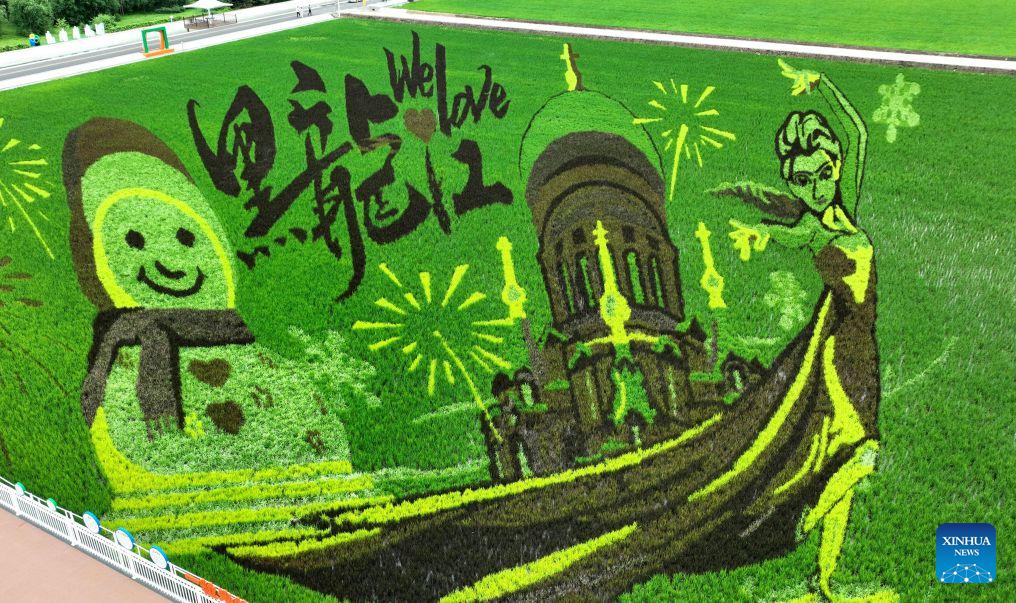
The emergence of creative rice paddy artworks across Heilongjiang is far more than an aesthetic trend; it represents a sophisticated evolution of rural revitalization strategy. By integrating traditional agricultural practices with cultural and creative industries, Heilongjiang is effectively transforming its vast grain-producing regions into dynamic "living museums." This shift is a key component of China’s broader effort to bridge the rural-urban divide, turning the agricultural landscape into a high-value asset that attracts tourism, boosts local income, and fosters a renewed sense of community pride.
From a technical perspective, these "tambo art" displays are a feat of precision and planning. The process begins with detailed computer-aided design (CAD) to ensure that images—which often span several hectares—are proportionally accurate when viewed from elevated observation platforms. By strategically planting various ancient rice strains—which naturally produce hues of purple, yellow, red, white, and green—farmers can "paint" expansive, intricate portraits. The technical challenge is significant, requiring careful management of soil nutrients and water levels to ensure uniform growth across the color-coded sections. The result is a transient, living masterpiece that evolves throughout the midsummer growing season, serving as a powerful magnet for domestic and international travelers.
The economic impact of this "creative agriculture" model is substantial. Data from various regions shows that by converting simple sightseeing into immersive cultural experiences—complete with sightseeing trains, homestays, and ethnic cultural performances—villages can drastically increase their revenue streams. For instance, in villages where agricultural tourism has been successfully integrated, per capita annual net income has reached levels as high as 35,000 yuan, supported by a steady flow of visitors that can reach 1.5 million annually. This model not only creates local employment opportunities in service, hospitality, and management but also incentivizes younger generations to return to rural areas, reversing the "hollow village" trend seen in many parts of the country.
As noted in coverage by People's Daily, the success of these artistic fields is part of a larger, high-quality development drive that utilizes innovation to "hold the rice bowl firmly." Beyond the immediate tourism revenue, these projects act as a catalyst for local branding. High-quality rice produced in these fields often commands premium pricing—sometimes exceeding 200 yuan per kilogram—due to the strong cultural narrative attached to the brand. Looking forward, the scalability of this model depends on the continued integration of digital marketing, such as livestreaming and e-commerce, to reach wider markets. By combining the natural beauty of the "great northern wilderness" with cutting-edge cultural and agricultural ingenuity, Heilongjiang is proving that the future of farming lies in the marriage of yield-focused technology and experience-led tourism, ultimately ensuring that rural landscapes remain vibrant, profitable, and culturally significant in the 21st century.
News source: https://peoplesdaily.pdnews.cn/china/er/30052580413