
How Can AI character chat Improve My Virtual Social Experience?
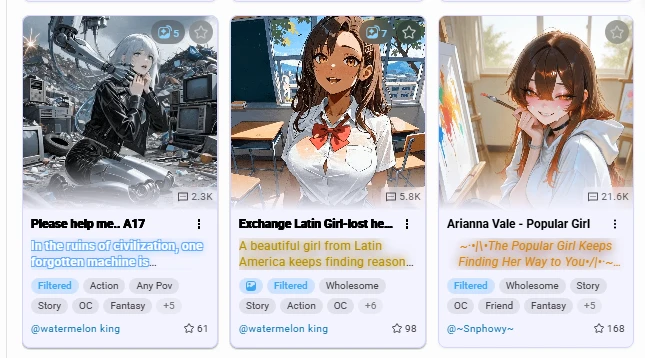
AI character chat can improve virtual social experiences by offering personalized conversations, 24/7 availability, and adaptive personalities. In 2025, AI companion platforms attracted millions of users worldwide, with many users spending 20–60 minutes per day interacting with virtual characters. These systems improve online communication by remembering preferences, adjusting conversation styles, supporting creativity, and providing low-pressure social interaction. Personalized memory and emotional response systems allow AI characters to create experiences that feel more consistent than traditional automated chats.
AI character chat has changed virtual communication by moving beyond simple question-answer interactions. Traditional chatbots often rely on fixed response patterns, while modern AI characters use large language models trained on billions of text examples to generate more natural conversations. According to industry reports from 2024, the global conversational AI market continued expanding rapidly, with businesses and entertainment platforms increasing investment in personalized digital assistants and virtual companions.
The difference comes from how AI characters handle context. A character can remember previous conversations, recognize preferred topics, and adjust its tone according to the user's communication style. For example, a virtual companion designed as a book lover may recommend novels based on earlier discussions, while a fitness-focused character may remember previous goals and provide suitable encouragement.
“A conversation becomes more engaging when users feel that the other side understands their preferences rather than simply responding to keywords.”
This personalization changes the experience from temporary interaction into an ongoing digital relationship. A 2023 survey of more than 1,000 AI companion users reported that over 60% considered memory features important when choosing an AI character platform.
The improvement in personalization also affects how people approach virtual social spaces. Many users enter online communities but struggle to find conversations that match their interests. AI characters provide immediate interaction without waiting for another person to be online.
This availability is especially useful because online social participation is often affected by schedules and time zones. A user in the United States may want to practice communication late at night, while traditional platforms may have limited active participants. AI characters remove this limitation by providing continuous conversation.
| Traditional online interaction | AI character chat |
|---|---|
| Depends on other users being available | Available at any time |
| Usually starts from zero context | Can remember previous conversations |
| Limited by social pressure | Allows private practice |
| Often follows fixed topics | Can adapt to user interests |
The ability to communicate at any time creates more opportunities for social practice. A 2024 study published in the field of human-computer interaction found that conversational systems with personalized responses improved user engagement compared with systems using generic replies.
Beyond convenience, AI character chat also changes how people practice social communication. Some users feel uncomfortable starting conversations with strangers or expressing personal thoughts in public communities. Virtual characters provide a private environment where users can practice different communication styles.
For language learners, AI characters can act as conversation partners. Instead of repeating textbook sentences, users can discuss daily topics, receive corrections, and adjust the difficulty of conversations. Research on AI-assisted language learning published between 2020 and 2024 showed that conversational AI tools could improve speaking practice frequency because learners were able to repeat interactions without time restrictions.
The same principle applies to professional communication. Users can simulate interviews, presentations, or workplace conversations with AI characters before participating in real situations. The ability to repeat the same scenario multiple times allows users to gradually improve confidence.
AI characters are also becoming an important part of gaming and entertainment. Earlier non-player characters (NPCs) usually followed scripts written by developers. After players completed available dialogue options, the interaction often became repetitive.
AI-powered characters introduce more flexible conversations. A virtual character in a game can respond differently depending on player choices, creating more personalized story experiences. In 2023 and 2024, several gaming companies explored generative AI systems that allowed NPCs to produce unique dialogue instead of relying only on pre-written lines.
“The difference between a scripted character and an AI character is the ability to continue a conversation beyond prepared content.”
This development changes virtual worlds because characters can become more interactive participants rather than simple background elements. Players may create stories, develop fictional relationships, or explore different personalities through long-term conversations.
AI character chat has also expanded into creative activities. Writers use AI characters to test dialogue, develop fictional personalities, and explore different storytelling directions. A writer creating a science-fiction story, for example, can communicate with a virtual character representing a spaceship captain to explore possible conversations and personality traits.
Artists and content creators also use AI characters for brainstorming. Instead of creating ideas alone, they can discuss concepts with a digital partner that responds immediately. This interactive process reduces the distance between creating an idea and developing it into a complete concept.
Another growing area is adult-oriented virtual communication, including AI sexting experiences. Some platforms provide customized characters for users who want romantic or intimate conversations in a private digital environment. For example, AI-based romantic chat services allow users to create fictional personalities and define conversation preferences. More information about this type of interaction can be found through ai sexting.
The development of AI character chat is also connected with emotional support applications. Many users communicate with AI characters when they need someone to talk with, organize thoughts, or discuss everyday experiences. These systems can provide responses based on emotional language patterns and maintain a supportive conversation style.
However, AI characters are designed as digital tools rather than replacements for human relationships. Human communication includes physical presence, shared experiences, and complex emotional connections that current AI systems cannot fully reproduce.
A balanced approach is important because AI companionship works best when it adds another communication option. A 2024 research review on digital companionship noted that users often valued AI interaction for convenience and availability, while still maintaining relationships with family, friends, and communities.
The future development of AI character chat will likely focus on better memory systems, voice interaction, realistic avatars, and multimodal communication. By 2025, many platforms had already combined text, voice, and visual elements to create more immersive experiences.
| Technology development | Expected improvement |
|---|---|
| Long-term memory systems | More consistent conversations |
| Voice-based interaction | More natural communication |
| AI avatars | More expressive virtual characters |
| Multimodal models | Combination of text, images, and audio |
As virtual environments continue expanding, AI character chat may become a common part of entertainment, education, language learning, and personal digital communication. The ability to interact with customized personalities gives users more flexibility in how they experience social connection online.
The growth of AI characters shows a shift from passive digital consumption toward active participation. Instead of only watching content or browsing communities, users can communicate with adaptive virtual personalities that respond to their interests, preferences, and creative goals. With continued improvements in AI technology, virtual social experiences will become more personalized, interactive, and accessible for different types of users.